Assistive Technology and Robotics
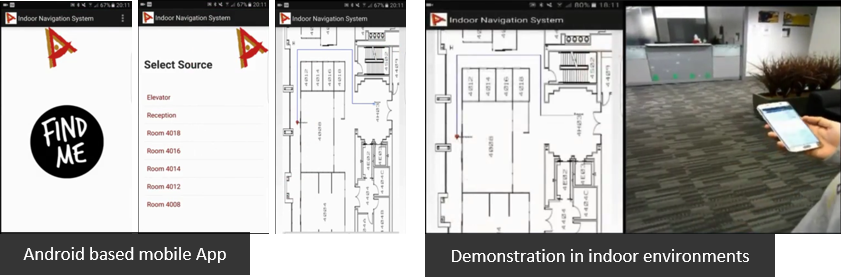
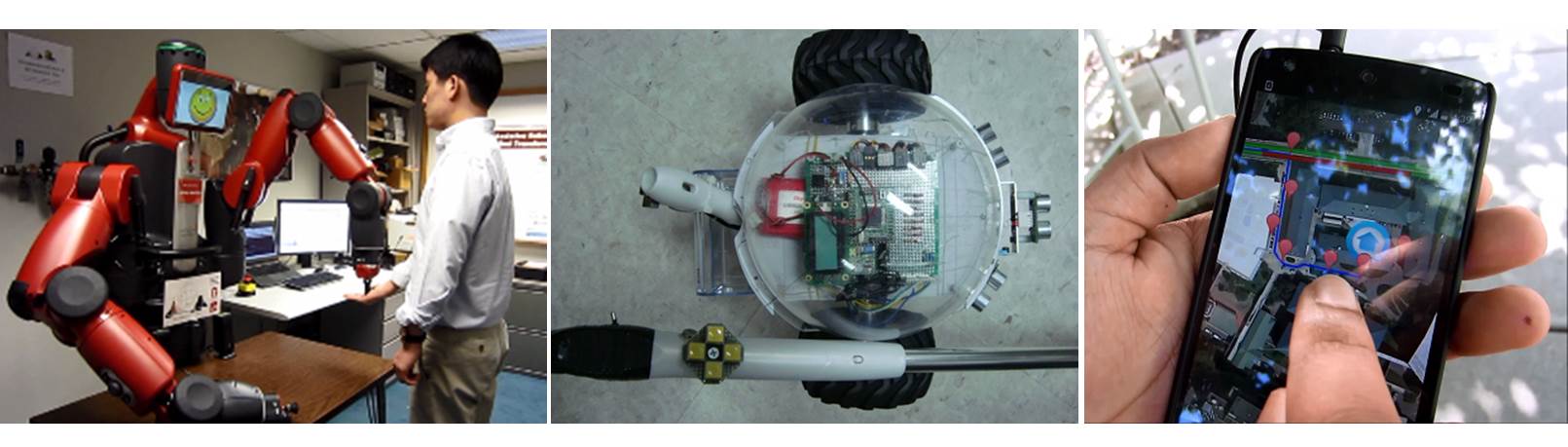
Interactive Indoor Navigation Aid System for Visually Impaired People
The World Health Organization (WHO)
estimates that 285 million people in the world are visually
impaired, of whom 39 million are blind. Although safe and
independent mobility is a critical element of modern life,
traveling in unfamiliar environments can be challenging and
often daunting for visually impaired people due to the lack of
appropriate navigation aid tools. In order to get familiarity
with new places, visually impaired people usually take many
times of mobility training through orientation & mobility
instructors or their family. However, this training is time
consuming and expensive for all the parties. Furthermore, it
often appears to be challenging for visually impaired people
to memorize all the steps to navigate new places
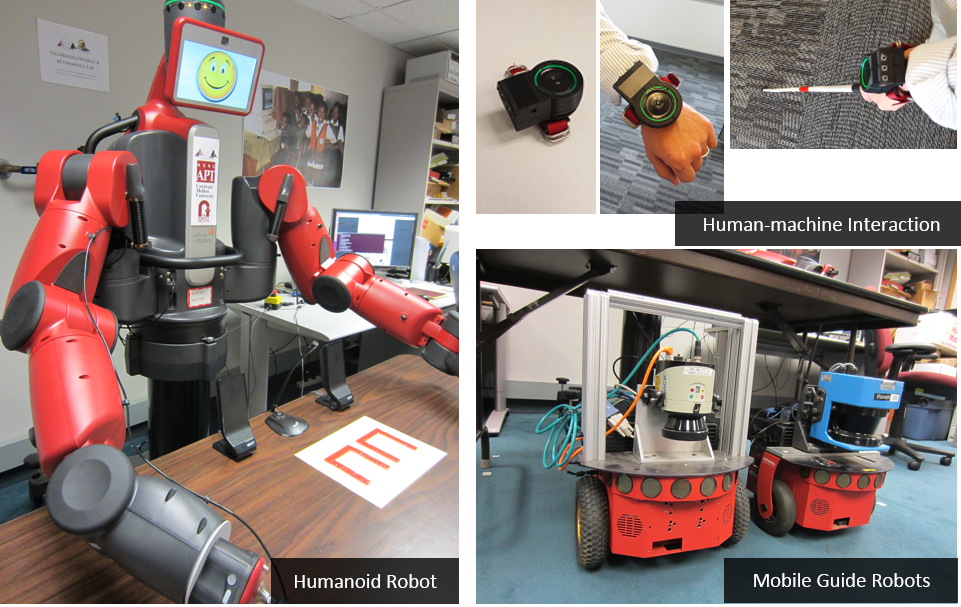
independently. The objective of this project is to develop
improved and appropriate navigation aid tools that will enable
visually impaired people to travel unfamiliar environments
safely and independently with minimal training and effort.

Examine the Potential of Robots to Teach Emotional Concepts
Autistic people is a special group who
have impaired ability in social interaction, social
communication and imagination. Several approaches have
been used to help them, among which humanoid robot is
emerging as a new tool to teach them recently, since it
could offer more simplified physical features and
controllable environment which is preferred by autistic
children. At the same time, a robot could offer a
human-friendly conversational environment which is
appropriate to emotion and social skills learning. This
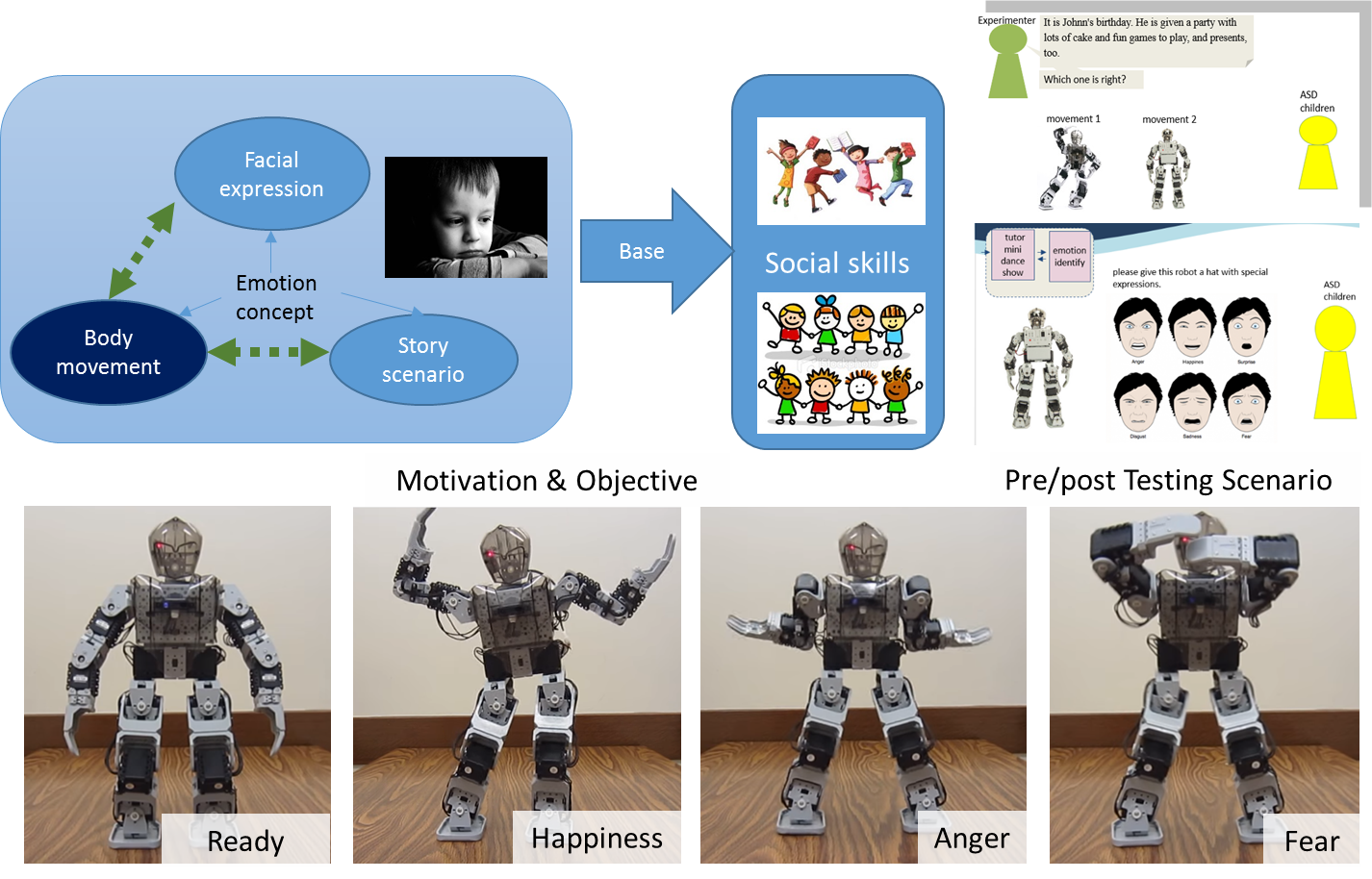
project is trying to design a set of robot body movements
which is supposed to express different emotions and a
robot-mediated instruction prototype to explore the
potential of robots to teach emotional concepts to
autistic children.
Emergency and Non – Emergency Response Using Smartphone-based Indoor Localization
The purpose of this study is for a
blind user to request help based on emergency and
non-emergency situation using indoor navigation
application. Usage of indoor navigation application is
to serve the purpose of sending the exact location of a
blind user to the responders when the blind user is in
indoor settings. The goal of the study is twofold. The
first goal of this research is to build an android
application and achieve accuracy of one meter or less
using Wi-Fi signals inside the building. The second goal
of this study is to evaluate the usefulness of providing
the exact location i.e., room number, floor, floor map
and building name to the emergency responders to reach
the destination promptly. The main idea behind this
project is to evaluate, if providing exact location of a
user inside a building helps emergency or non-emergency
responders to reach location inside the building quicker
rather than searching entire building for the victim. As
a preliminary study, an accuracy of one meter was
achieved around 70 percent of the time in our test runs,
and this accuracy implies that we were able to send the
exact location of the blind user with one-meter accuracy
to the responders 70 percent of the times.